
The Question
When someone speaks, does their voice carry information that the transcript alone misses? Pace, pauses, pitch, hesitation, researchers know these signals are there but have struggled to extract them at scale. Dr. Dre has terabytes of audio and a research question that needs a working pipeline to answer. The pipeline does not exist yet. That is the project.
What Students Build
Over five weeks, students build a working audio intelligence pipeline from scratch, moving through the same pattern that powers serious research on large audio corpora: audio to text, find the construct in the text, analyze the audio around it.
It starts with listening. Students spend time with recorded business communications, developing an ear for what executives communicate beyond the numbers — the hesitations, the emphasis, the moments where language choices reveal something the data alone cannot. From there they build each stage of the pipeline: transcribing audio, applying a dictionary and a language model to find the same constructs and comparing what each misses, mapping findings back to the original audio, and extracting vocal features from the moments that matter.
The final week asks students to tell a story. They build a visualization, identify the most interesting moments in the recording, and present their findings to the cohort. They leave with a working multi-stage pipeline they built and debugged themselves, the experience of connecting a research question to a concrete analytical artifact, and a foundation they can extend independently — into new corpora, new constructs, or new questions of their own.
The Mentors
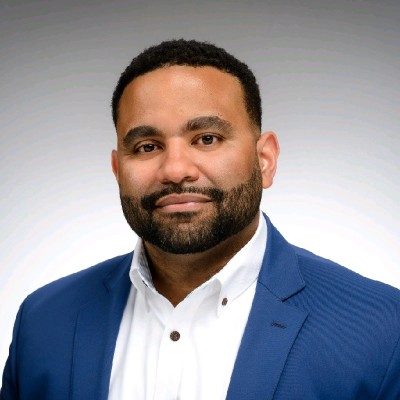
Dr. Andre Martin (Dr. Dre to his students) is an assistant professor at Notre Dame's Mendoza College of Business. He spent fifteen years at Xerox and in defense contracting before a PhD in marketing opened a different question: what can AI reveal about human behavior, language, and persuasion in real business contexts? This summer his students will build a pipeline that supports his ongoing research, processing audio at scale to surface signals that human listeners would miss. The work is real. The data is real. The pipeline they build will be used.
Dr. Dre is the research sponsor for this lab. The project, the data, and the research direction come from him. An Academy mentor runs day-to-day sessions and works closely with him on the project. Students also work alongside SeqHub research interns, scholars actively engaged in this work, bringing an additional layer of real research perspective to the lab. Dr. Dre joins key milestones and Demo Day, and stays available to students throughout.
Who This Is For
Python proficiency is required, comfort with functions, libraries, and reading documentation. Familiarity with audio data, speech, or basic machine learning is a plus but not required. The Academy mentor will teach what students need. The right student here likes building things that work end to end, is comfortable with messy real-world data, and finds it interesting that human voices carry information words alone don't. Students who only want to work in clean notebooks with toy datasets will struggle.
Logistics
Five weeks. July 6 to August 7, 2026. Mondays, Wednesdays, and Fridays, 1:00 PM to 2:15 PM ET. Friday sessions run 1:00 PM to 3:00 PM ET to accommodate Demo Day. Cohorts of 3 to 4 students per mentor. $4,500. Apply by June 16, 2026 at 11:59 PM.
Project Labs require a minimum of two students to run. If your student is the only applicant in a given lab, we will reach out before the program begins with three options: upgrading to a 1-on-1 mentorship, transferring to another active Project Lab, or a full refund.
Beyond the live sessions, students work on their own, and they are not alone when they do. The lab is supported by a 24/7 Slack channel and a team of scholars and practitioners at the Academy. Students also work alongside SeqHub's AI co-teacher, which helps them think through problems on off days without doing the work for them. Plan for 10 to 12 hours per week, with 4.5 hours in live sessions and the rest on independent work.
Applications close June 16